Train Addiction Help Line: 1.866.840.7777
Oct 5, 2013 - N Scale
PWRS Exclusive Micro-Trains Canadian Pacific 40 ft Grain Service Box Cars Coming Down The Track


Grain Service Box Car 4-Pack Artwork Released

Above is the packaging artwork for our upcoming Pacific Western Rail Systems Exclusive Micro-Trains N Scale Canadian Pacific 40 ft Grain Service Box Car 4-Pack. This one time run of these 4 road numbers will be arriving shortly. Orders have been very heavy for these and there are only a a couple sets left available.
If you have not ordered these previously and would like to, order now or miss the train. Remember the cars will come with Copping. We do intend to release other cars to go with this release, so you can create a consist of cars set up to move grain on prairie branchlines to market. These cars were used until the late 1990. For more information please read the articule below.
Boxcars were the freight car of choice for grain transportation from the early 1900's until they were replaced by gravity-discharge aluminum and steel covered hoppers beginning in the 1970's. The covered hoppers were easier to load and unload. Boxcars required wooden or cardboard grain doors, to hold the cargo in while the car was being loaded via the door. We have simulated this by providing 2 cars with Plywood inserts and two with cardboard inserts.
In 1987, terminal car dumpers still existed for boxcar unloading, but they were quickly aging, and costly to repair and operate. Grain boxcar fleets declined through attrition, and the railways' intention after 1986 to use them only on branchlines unable to accommodate the heavier covered hoppers.
The Canadian Federal government boxcar rehabilitation schemes were undertaken in 1979 and 1980. The floors, nailable door areas, spot welding, and doors were repaired and spray painting was done. A yellow wheat sheaf, a smaller version of the government grain hopper scheme, was applied to the left of the door. Under it was a stencilled a bilingual message, reading in part, "REPAIRED WITH FINANCIAL CONTRIBUTION FROM THE GOVERNMENT OF CANADA".

024 91 035 CP #a w/ paper doors
024 92 035 CP #b w/ paper doors
024 93 035 CP #c w/ wood doors
024 94 035 CP #d w/ wood doors
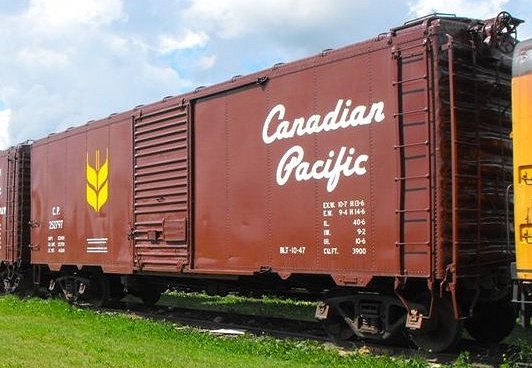
Proto-type photo CP 252797 courtesy of Beiseker Railway Museum
The way the grain agent would load these cars is a little different from a modern hopper. First the agent would climb into the car with all the materials he would need along with a ladder ( this was very important ). The agent would nail a large piece of cardboard over the door opening from the inside. He would leave a few feet of room at the top open to load the car with. He would then re-enforce the cardboard with metal strapping. This procedure was repeated for the other door as well. Then the agent would use the ladder to climb out of the car through the opening he had left at the top of the door. At the ports a large scoop with a spiked end was rammed through the cardboard door to unload the car. The job was finished by sweeping the remains out of the car.
Loading levels were painted on the inside of the car to tell the agent how much to load to. There are different levels for Oats, Barley, and Wheat as these all weighed different amounts and the car could not exceed a set tonnage.
For more information and photos, visit Beiseker Railway Museum
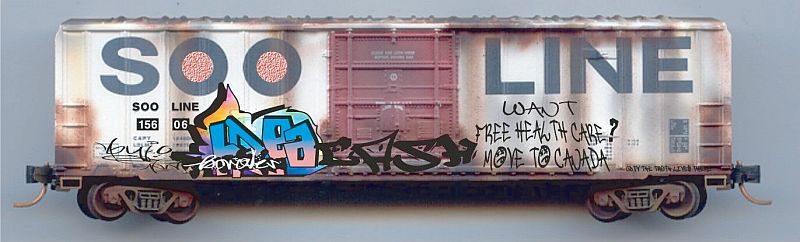
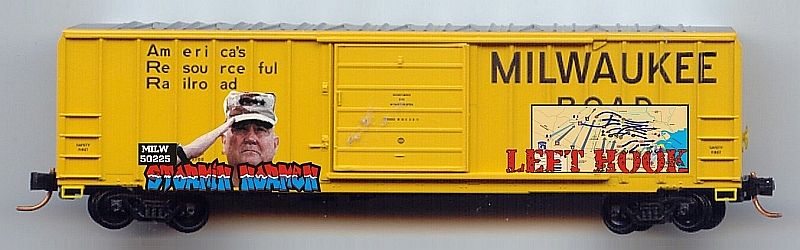
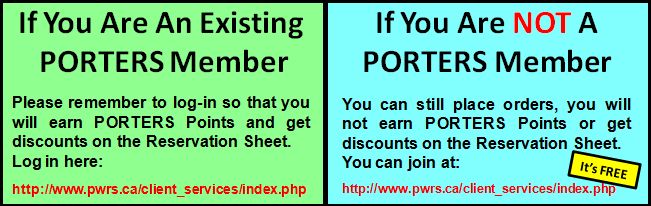
PORTERS Members: Remember all Micro-Trains purchases earn Micro-Trains Manufacturer Credits that can be used towards current and future Micro-Trains PORTERS Club Lounge Cars such as the Cars below.
JMP
Product Details


 © 2026 Pacific Western Rail Systems
Train Addiction Help Line: 1 866 840 7777
© 2026 Pacific Western Rail Systems
Train Addiction Help Line: 1 866 840 7777