Train Addiction Help Line: 1.866.840.7777
Dec 21, 2011 - N Scale
Kato Adds More Loco's to their line with a new GG1 and two E8A's from PRR


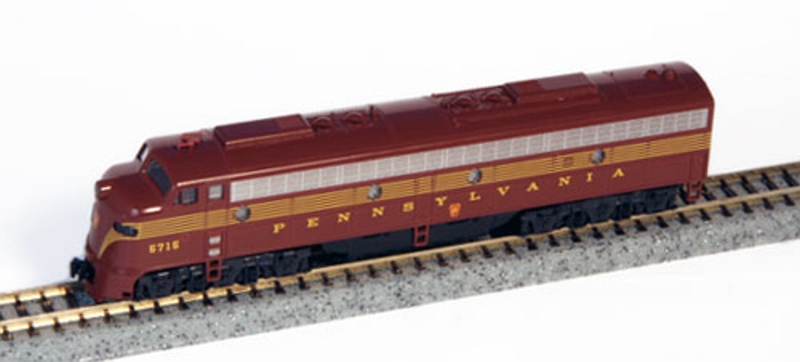
The E8 and E9 diesel locomotives share the similar "bulldog nose" carbody style as the shorter, more popular F7 and were powered by two separate 12-cylinder prime movers (i.e., diesel engines) capable of producing 2250/2400 hp. E8 and E9 locomotives also rode on A-1-A trucks (powered axle-idler axle-powered axle), resulting in an exceptionally smooth ride favored by crews. The E8 and E9 were produced in both A-units and cabless B-units; the A-units were usually built to railroad specification of either single or dual headlight and freight or passenger pilot. Like the F3 and F7 of the same time period, the E8 and E9 were utilized in both passenger and freight service.

The GG1, one of the PRR's most famous and recognizable locomotives, is also one of the most curiously designed. Technically two locomotives under one shell (a "G" class locomotive is a 4-6-0 by PRR specification, therefore the GG1 was two "G" locomotives in a 4-6-0:0-6-4 arrangement). This added up to a 4.6k horsepower locomotive that was staggeringly powerful, even by today's standards. Designed in the 20's, built in 30's, and not retired until the 80's, the GG1 had an incredible lifespan (even when they were cut in two and run as GG½'s) and survives today as a testament to its time in both its unique Loewy-design and overwhelming performance.
Amtrak and Penn Central: Thanks to the long life and usefulness of the GG1, many outlived the PRR, finding themselves in Penn Central, and later in their life, Amtrak paint. These locomotives were used in everything from freight service to pulling Amtrak Passenger trains.
Available for Immediate Delivery
grl
Product Details


 © 2026 Pacific Western Rail Systems
Train Addiction Help Line: 1 866 840 7777
© 2026 Pacific Western Rail Systems
Train Addiction Help Line: 1 866 840 7777